Most dealerships think they understand their marketing performance.
They get monthly reports. They see impressions, clicks, and traffic going up. On paper, everything looks like it’s working.
But then a simple question comes up:
“Is any of this actually selling cars?”
And that’s where things fall apart.
If you can’t clearly connect your marketing efforts to real vehicle sales, you’re not measuring performance. You’re measuring activity.
This is where most dealerships get stuck.
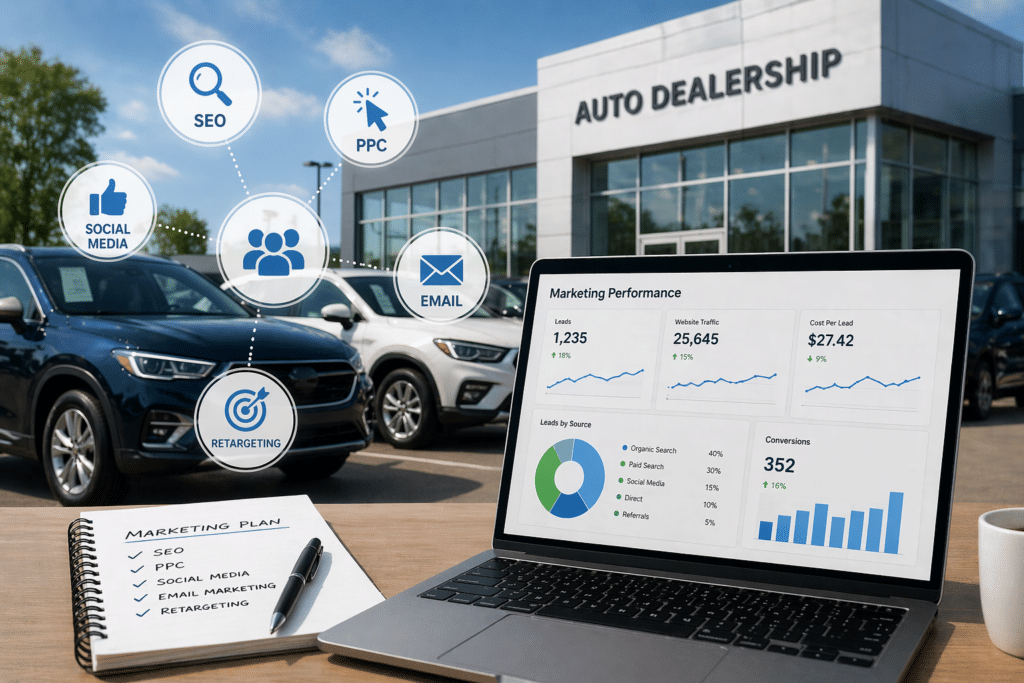
Why Most Dealership Marketing Reports Don’t Mean Anything
The typical dealership marketing report is full of numbers:
- Impressions
- Click-through rate (CTR)
- Cost per click (CPC)
- Website traffic
- Social engagement
None of those are inherently bad. The problem is they don’t answer the only question that matters:
Did this generate revenue?
A campaign can drive 50,000 impressions and still produce zero leads.
A social post can get hundreds of likes and never generate a phone call.
These reports look detailed. They feel productive. But they rarely tie back to actual sales.
That disconnect is what creates uncertainty for dealership owners and managers.
Vanity Metrics vs. Real Results
Vanity metrics are numbers that make marketing look successful without proving that it is.
Here’s how they show up in dealerships:
- High impressions → “We’re getting visibility”
- More clicks → “People are engaging”
- Social likes → “The brand is growing”
But none of those guarantee:
- Leads
- Appointments
- Showroom visits
- Vehicle sales
The danger is subtle but expensive.
When you rely on vanity metrics, you keep investing in what looks good instead of what actually performs.
Over time, that leads to wasted budget, missed opportunities, and frustration with your marketing.
The 4 Metrics Every Dealership Should Track
If you want clarity, you don’t need more data. You need the right data.
These four metrics give you a complete picture of dealership marketing performance:
1. Cost Per Lead (CPL)
This tells you how much it costs to generate a real lead.
Not a click. Not a visit. A real person who:
- Submits a form
- Calls your dealership
- Starts a conversation
If you don’t know your CPL, you don’t know how efficient your marketing is.
2. Cost Per Sale
This is where most dealerships stop tracking. And it’s a mistake.
You need to know:
- How many leads turn into sales
- What each sale actually costs in marketing spend
Without this, you can’t evaluate profitability by channel.
3. Lead Source Attribution
Where did your best leads come from?
- Organic search (SEO)
- Paid ads
- Third-party listing sites
- Social media
- Referrals
If you don’t know which channels produce real buyers, you can’t make smart budget decisions.
4. Return on Investment (ROI)
This is the ultimate metric.
For every dollar you spend on marketing, how many dollars come back?
Not estimated. Not assumed. Measured.
Once you have this number, everything else becomes clearer.
Why Most Dealerships Can’t Track ROI Accurately
Here’s the reality: most dealerships aren’t set up to track these numbers properly.
Not because they don’t care. Because the infrastructure isn’t there.
Common breakdowns include:
- No conversion tracking on the website
- CRM not connected to marketing platforms
- No call tracking in place
- No connection between marketing data and DMS
When this happens, leads fall through the cracks.
Phone calls aren’t attributed.
Sales aren’t tied back to campaigns.
Reports become guesswork.
And every marketing conversation turns into a debate instead of a decision.
How to Fix Your Dealership’s Marketing Tracking
This is where things start to shift.
You don’t need a complete overhaul overnight. You need to fix the foundation.
1. Implement Full Conversion Tracking
Every action that matters should be tracked:
- Form submissions
- Phone calls
- Chat interactions
Each one should be tied back to a specific marketing source.
2. Connect Your CRM to Your Marketing Data
Leads should flow cleanly into your CRM with source data attached.
This allows you to track:
- Lead quality
- Sales outcomes
- Channel performance
Without this connection, attribution breaks.
3. Build Reports Around Outcomes, Not Activity
Instead of 30-page reports filled with charts, focus on three numbers:
- Cost per lead
- Cost per sale
- ROI by channel
That’s it.
Those three numbers will tell you more than any dashboard full of impressions.
What Happens When You Finally Have Clear Data
When dealerships get proper tracking in place, everything changes.
- Decisions get faster → No more guessing
- Budgets get smarter → Money shifts to what works
- Vendor conversations improve → Less narrative, more accountability
- Confidence returns → You know what’s driving sales
Instead of asking, “Is our marketing working?”
You start asking, “How do we scale what’s already working?”
That’s a completely different position to be in and we have seen this firsthand across multiple dealerships.
The Bottom Line
Most dealership marketing doesn’t fail because of bad strategy.
It fails because of bad measurement.
If you’re not tracking cost per lead, cost per sale, and ROI, you’re operating without visibility. And that makes growth unpredictable.
Once you fix that, everything else becomes easier.
Want to See Where Your Dealership Stands?
If you’re not 100% confident in your numbers, that’s where to start.
We offer a free marketing and visibility audit where we:
- Review your current tracking setup
- Identify gaps in your data
- Show you exactly what’s missing
- Map out how to measure real performance
No fluff. No vanity metrics. Just clarity.